RBI’s 2025 Guidelines for Note Exchange: The Reserve Bank of India (RBI) has introduced a fresh set of guidelines aimed at simplifying the process of exchanging torn or damaged currency notes, set to take effect in 2025. This move is expected to make the exchange procedure more accessible and user-friendly for the general public.
Understanding the 2025 RBI Note Exchange Guidelines
The RBI’s new guidelines are designed to streamline the process of exchanging damaged notes, ensuring that citizens can easily replace unusable currency without unnecessary hassle. This initiative is a part of RBI’s ongoing efforts to enhance customer service and improve the efficiency of financial operations across the country.
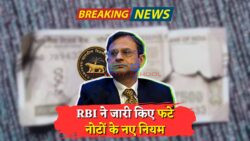 अगर आपके पास है फटा या जला हुआ नोट, तो जान लीजिए RBI के नए नियम क्या कहते हैं – पूरी जानकारी यहां
Key Highlights of the Guidelines:


- Ease of Access: The guidelines aim to make it easier for individuals to exchange notes at any bank branch, without the need for account-holder status.
- Standardized Process: A uniform procedure will be implemented nationwide, ensuring consistency and transparency in the exchange process.
- Public Awareness: The RBI plans to launch awareness campaigns to educate people about the new guidelines and their rights regarding currency exchange.
These measures are expected to benefit a wide range of people, from small business owners to daily wage earners, who often face challenges with damaged notes.

Why RBI’s Move is Significant
In a country where cash transactions are still prevalent, the condition of currency notes plays a crucial role in the day-to-day economy. Damaged notes not only inconvenience individuals but also disrupt smooth financial transactions across sectors.

Impacts of the New Guidelines:

- Promotes financial inclusion by facilitating access for everyone.
- Reduces the circulation of counterfeit and unusable currency.
- Enhances public confidence in the financial system.
- Encourages proper handling and maintenance of currency.
- Supports businesses in maintaining cash flow and efficiency.
- Minimizes disputes related to acceptance of torn notes.
The new rules are a step towards a more robust banking infrastructure, reflecting RBI’s commitment to addressing everyday financial challenges faced by citizens.
How to Exchange Torn or Damaged Notes
Exchanging a damaged note under the new guidelines will be straightforward. Here’s a step-by-step guide to help you through the process:
Step-by-Step Exchange Process:
- Visit your nearest bank branch with the damaged note.
- Fill out a simple form provided by the bank.
- Submit the form along with the note to the bank official.
- Wait for the bank to verify the note’s authenticity.
Things to Keep in Mind:
- Ensure that the note is not completely torn or burnt.
- Keep a copy of the exchange form for your records.
- Follow any specific instructions provided by the bank.
- Be patient as the verification process may take some time.
Frequently Asked Questions about Damaged Note Exchange
Let’s address some common queries regarding the new RBI guidelines for exchanging damaged notes.
FAQs
| Question | Answer |
|---|---|
| What types of notes can be exchanged? | Notes that are torn, soiled, or damaged can be exchanged. |
| Do I need to have an account with the bank? | No, you can exchange notes at any bank without having an account. |
| Will there be any charges for exchanging notes? | No charges will be applied for exchanging torn or damaged notes. |
| How long does the exchange process take? | The process is generally quick but might vary slightly between banks. |
| Can heavily damaged notes be exchanged? | Yes, but they must be identifiable and not completely destroyed. |
| Are there any limits on the number of notes? | There might be limits; check with the specific bank for details. |
| What if a bank refuses to exchange a note? | You can escalate the issue to the RBI’s customer service. |
Benefits of RBI’s Guidelines for Public
The introduction of these guidelines is expected to provide numerous advantages to the general public, fostering a more inclusive and efficient financial environment.
- Improved customer satisfaction through simplified procedures.
- Increased trust in the banking system.
- Better circulation of quality currency notes.
- Enhanced financial literacy and awareness.
- Strengthened relationship between banks and customers.
The RBI’s initiative is indeed a positive step forward in modernizing India’s financial landscape.
Initiatives to Promote the Guidelines
RBI’s Efforts:
- Conducting workshops and training sessions for bank staff.
- Launching nationwide awareness campaigns.
- Collaborating with media outlets to spread the word.
Understanding the Exchange Policy
| Aspect | Details |
|---|---|
| Eligibility | All Indian citizens with damaged notes. |
| Process | Visit any bank branch with the note. |
| Documents | Only an exchange form is needed. |
| Timeframe | Typically completed in a day. |
| Verification | Required to ensure authenticity. |
| Awareness | RBI will run educational campaigns. |
Future Outlook for RBI’s Note Exchange Program
- Continued enhancements to the exchange process.
- Increased public participation and cooperation.
- Further integration with digital banking services.
- Expansion of services to rural areas.
Overall, the RBI’s 2025 guidelines reflect a forward-thinking approach to addressing common financial issues and improving the lives of millions of Indians.
FAQs
What are the new guidelines for exchanging torn notes?
The guidelines streamline the process, allowing easy exchange at any bank without needing an account.
Are there any limitations on exchanging notes?
While generally accommodating, banks may impose limits; it’s best to confirm with your bank.
Is there a fee for exchanging damaged notes?
No, the exchange service is free of charge.
What should I do if a bank refuses to exchange my note?
Contact the RBI’s customer service for assistance.
Will exchange policies vary between banks?

The RBI aims for a uniform policy, but minor differences may occur; always check with your bank.